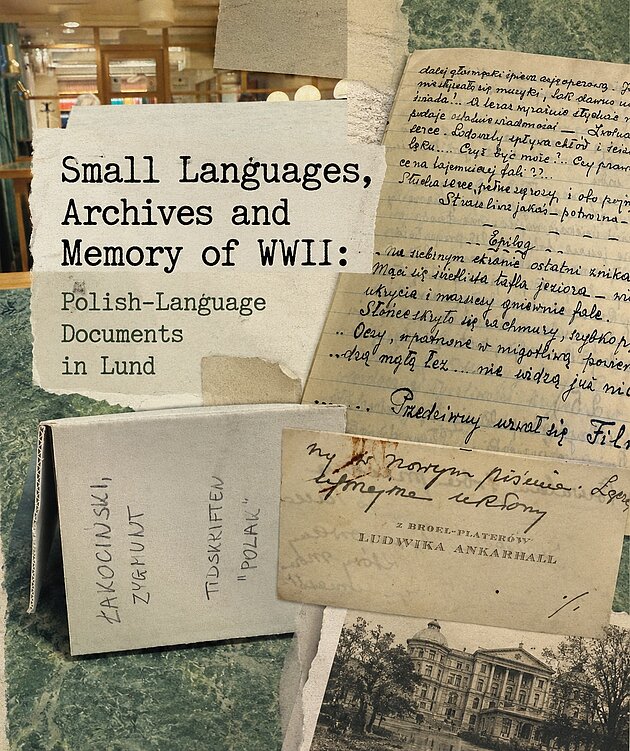
Small Languages, Archives and Memory of the Second World War
Polish-Language Documents from the Early DP Movements in Lund, 1945–1946
Funded by CEMES, 2026
Project Leaders:
Urszula Ulla Chowaniec, Lund University
Anita Pluwak, University of Copenhagen
Keywords: Small languages · Archival memory · Postwar displacement
About the Project
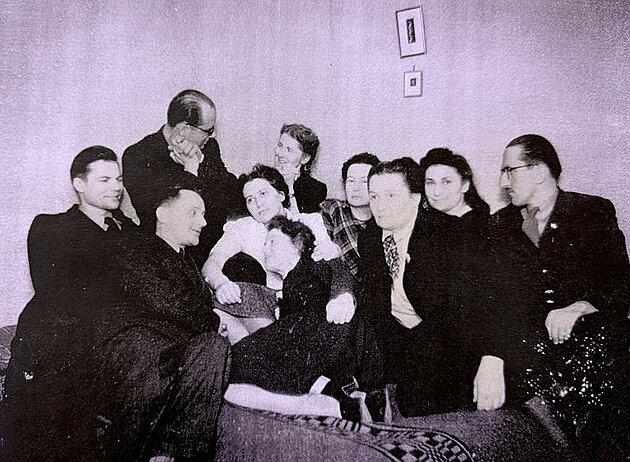
In 1945, thousands of concentration camp survivors arrived in Scandinavia through rescue operations including the White Buses, organised by the Swedish Red Cross in cooperation with Danish and other organisations. Among them were many women who had survived Ravensbrück concentration camp.
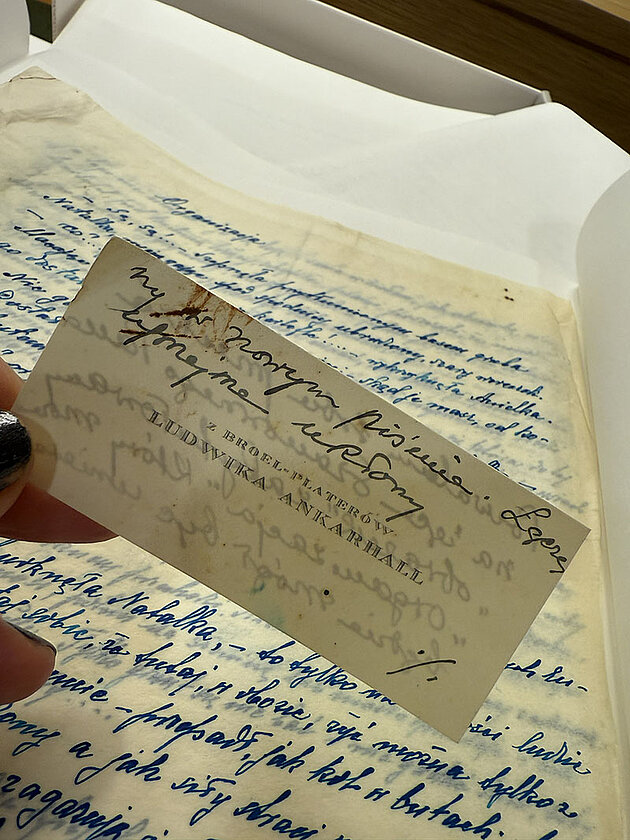
Today, their testimonies, letters, literary texts, autobiographical accounts and other personal documents are preserved in the Ravensbrück and Zygmunt Łakociński collections at Lund University. The Ravensbrück Archive has been included in UNESCO’s Memory of the World Register, underlining its exceptional historical importance.
Small Languages, Archives and Memory of the Second World War focuses on Polish-language materials preserved in these collections, particularly documents created in the immediate postwar period, in 1945–1946.
Many of these sources remain insufficiently explored because of linguistic barriers. The project therefore asks a central question:
What histories become visible when we can read the languages in which they were written?
The project examines Polish-language literary, autobiographical and personal documents created by survivors, refugees and Displaced Persons in Sweden. It focuses especially on representations of emotion, self-expression, displacement, survival and the difficult process of rebuilding life after the war.
Polish functions here not only as the language of the documents, but also as an analytical key to archival scholarship, Holocaust research, literary studies, memory studies and migration history.
Why Small Languages?
The project draws attention to the role of so-called small languages in international humanities research.
Archival materials may be preserved, catalogued and physically accessible, yet remain largely invisible if researchers lack the linguistic competence required to read them in their original form.
The project therefore explores how language influences:
- access to archives
- interpretation of testimony
- the production of historical knowledge
- the visibility of particular experiences
- the marginalisation of less internationally dominant languages
In this way, the project contributes to wider debates on archival silences, multilingual memory, translation and epistemic inequality.
Activities 2026
Lund, 24–26 August 2026
The first workshop brings together Urszula Ulla Chowaniec and Anita Pluwak for intensive archival research in Lund.
The work will include:
- mapping Polish-language materials in the Łakociński and related collections
- identifying literary, autobiographical and personal documents
- developing thematic clusters
- analysing representations of emotion and self-expression
- discussing translation and textual analysis
- identifying directions for future research
Outcome: a preliminary research framework, an overview of relevant Polish-language materials and preparation for further publications and external funding applications.
Lund University, 24–25 November 2026
The November seminar will bring together scholars working in:
- literary studies
- Holocaust studies
- memory studies
- migration history
- archival studies
- Polish and Central European studies
The programme will include:
- presentations of selected archival documents
- expert roundtable discussions
- methodological reflections on small languages and archives
- discussions of testimony, literature, emotion and postwar displacement
- planning of future collaborative research
A public presentation will also be organised within the YES Seminar framework at Lund University.
Towards 2027
The 2026 pilot project is conceived as the first stage of a longer international collaboration on small languages and archives.
In 2027, the project plans an international workshop at the University of Copenhagen:
Archives and Small Languages: Testimony, Migration, and Postwar Europe
The workshop will broaden the discussion beyond Polish-language sources and invite scholars working with minority, migrant and less internationally accessible languages.
Topics will include:
- linguistic accessibility of archives
- minority and migrant languages
- Holocaust testimony
- postwar migration
- archival methodologies
- translation and dissemination
- digital and public humanities
Outcome: expansion of the Nordic and international research network and preparation of a larger collaborative funding application.
Public Engagement
The project also aims to make archival research accessible beyond academia through:
- public seminars
- digital presentations of selected materials
- podcasts
- essays and outreach publications
- cooperation with libraries, archives and memory institutions
Funding
The project is funded by CEMES – Centre for Modern European Studies, 2026.
Urszula Ulla Chowaniec is Associate Professor and Senior Lecturer in Polish Studies at Lund University. Her research is situated at the intersection of literary studies, women’s writing, Polish-Jewish cultural history, Holocaust and memory studies, migration, Yiddish and Polish literature, feminist theory and archival research.
Her current work focuses particularly on neglected voices, multilingual archives and the ways literature and personal writing preserve experiences that may disappear from official historical narratives.
Anita Pluwak is Associate Teaching Professor in East European and Polish Studies at the University of Copenhagen.
Her research examines gender, memory and cultural narratives in socialist and postsocialist Central and Eastern Europe, with particular attention to Holocaust representation, visual culture, archival practices, women’s writing and post-1945 self-representation.
She is the author of Ambiguous Endeavors: The Melodramatic Mode in Polish Holocaust Narratives from Hanna Krall to The Aftermath.
The project is developed in dialogue with researchers specialising in memory studies, Holocaust studies, Polish studies, migration and archival research:
- Barbara Törnquist-Plewa, Lund University
- Victoria Van Orden Martínez, Lund University
- Malin Thor Tureby, Malmö University
- Anna Krakus, University of Copenhagen
- Tomasz Leśniak, Lund University
- Roma Sendyka, Jagiellonian University